

Workplace transformation advisors help organizations manage change by aligning physical space with organizational strategy, thereby reducing resistance and ensuring adoption. They act as trusted partners who guide stakeholders through the transition, balancing operational continuity with the need for a high-performance environment. This approach ensures that the new office supports business goals rather than disrupting them. For additional details, review the Inloggen in Servicedesk.
Strategic Alignment Before Physical Changes
Navigating Stakeholder Expectations
Office redesigns often involve multiple stakeholders with conflicting priorities. Management may focus on cost efficiency, while employees prioritize comfort and collaboration. Advisors facilitate dialogue to bridge these gaps. Stakeholder engagement is the process of actively involving key decision-makers and end-users in the planning phase to build consensus. For example, in a project for a large corporate client, WIAR helped align local management, the works council, and international headquarters. By creating a shared vision, they prevented the project from stalling in endless discussions. This collaborative approach ensures that the final design is supported by all parties, reducing the risk of post-move dissatisfaction. For additional details, review the WIAR Strategisch partner voor.
Risk-Bearing Delivery and Transparency
Traditional construction projects often shift risks to the client through open-ended contracts. Modern advisors adopt a risk-bearing model to provide certainty. Risk-bearing delivery is a contracting approach where the advisor assumes responsibility for budget, schedule, and quality outcomes. WIAR operates with 100% Open Book transparency, meaning all costs are visible to the client. They guarantee that projects are delivered within budget and on time. This level of accountability is crucial during change management, as it reduces anxiety among stakeholders who fear cost overruns or delays. By taking on the risk, the advisor allows the client to focus on the strategic benefits of the new workplace rather than the logistical headaches of construction. For additional details, review the Herinrichting BT Amsterdam BT.
Supporting Hybrid Work Transitions
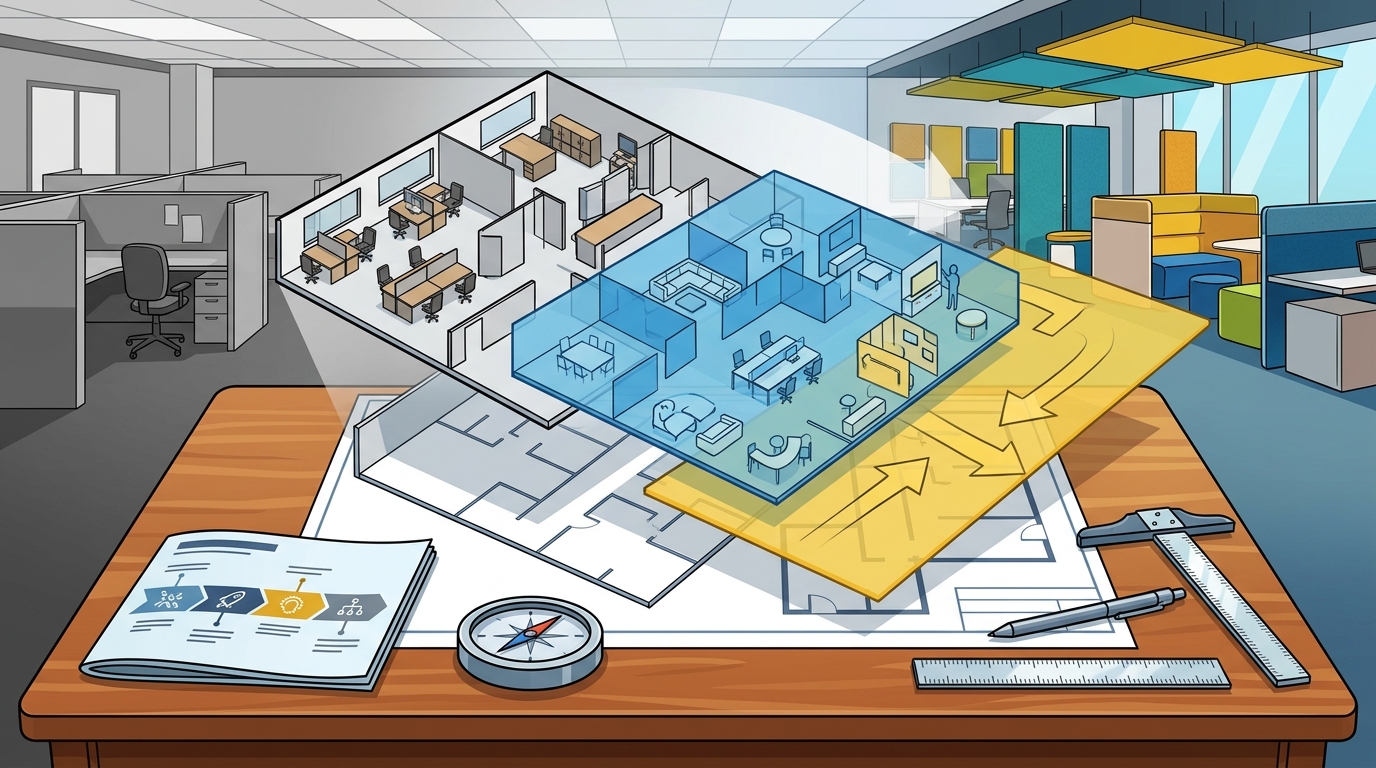
The shift to hybrid work has complicated change management. Organizations must design spaces that are attractive enough to bring people in, yet flexible enough to accommodate varying attendance patterns. Advisors help organizations navigate this by designing for activity-based working. Hybrid workplace design is the creation of flexible environments that support both focused individual work and collaborative team activities. WIAR has successfully implemented such environments for clients like KWF Kankerbestrijding in Amsterdam. They created a space with distinct zones for concentration, informal meetings, and social interaction. This design encourages employees to come to the office for meaningful interactions, thereby strengthening team cohesion and culture. The advisor guides the organization in communicating these benefits to staff, making the transition to hybrid work a positive experience rather than a forced change. For additional details, review the Herinrichting KWF Hybride Office.
Post-Move Optimization and Facility Management
Key Takeaways
- Workplace strategy must align physical space with business objectives to ensure the redesign drives performance.
- Active stakeholder engagement is essential to build consensus and reduce resistance to change.
- Risk-bearing delivery models provide budget and schedule certainty, reducing client anxiety during the transition.
- Hybrid workplace design requires flexible environments that support both focus and collaboration.
- Post-move optimization ensures the workplace continues to evolve with the organization's needs.
- Transparency and accountability are key to building trust between the advisor and the client.
Frequently Asked Questions
What is the role of a workplace transformation advisor?
A workplace transformation advisor guides organizations through the process of redesigning their office space. They align physical environments with business strategy, manage stakeholder expectations, and ensure the project is delivered on time and within budget.
How do advisors help with change management?
Advisors help with change management by facilitating communication between stakeholders, designing spaces that support new ways of working, and providing ongoing support after the move. They act as trusted partners who guide the organization through the transition.
What is risk-bearing delivery?
Risk-bearing delivery is a contracting model where the advisor assumes responsibility for the project's budget, schedule, and quality. This provides the client with certainty and reduces the risk of cost overruns or delays.
Why is transparency important in workplace projects?
Transparency is important because it builds trust between the advisor and the client. When all costs and decisions are visible, stakeholders feel more confident in the process and are more likely to support the changes being made.
How can a new office support hybrid work?
A new office can support hybrid work by providing flexible spaces for different activities. This includes areas for focused work, informal meetings, and social interaction. The design should encourage employees to come to the office for meaningful interactions.
What happens after the office is handed over?
Conclusion
Managing change during an office redesign requires more than just interior design. It demands a strategic approach that aligns space with business goals, engages stakeholders, and provides certainty through risk-bearing delivery. WIAR Workplace Performance brings 25 years of experience and a track record of 600+ successful transformations to this challenge. They operate with full transparency and financial discipline, ensuring that the new workplace becomes a strategic asset for your organization. To plan your visit or discuss your workplace strategy, .