

Improving office work environments requires a strategic approach that aligns physical space with organizational goals. WIAR Workplace Performance treats the office as a core management instrument, not just a cost center. This guide covers ergonomic furniture, noise management, flexible work arrangements, and employee feedback loops. It provides actionable steps for leaders to transform their workspace into a high-performance asset.
Ergonomic Furniture
Assessing Current Needs
Before purchasing new furniture, you must understand how your employees actually work. WIAR begins with a thorough inventory and analysis of your current setup. This process identifies gaps between the existing infrastructure and the actual needs of your staff. It is not about buying the most expensive chairs, but about selecting the right tools for the job. For example, a team focused on deep coding may need different acoustic and visual privacy than a sales team focused on client calls.
Strategic Procurement
Procurement is a critical phase where financial discipline meets quality assurance. WIAR utilizes a tendering process to select the best vendors, ensuring maximum added value. This approach often results in a 25 to 40 percent reduction in investment and operating costs. By managing the contract and the realization process, WIAR takes on the risk of the project. This means that if issues arise during the installation or setup, WIAR resolves them without passing the financial burden to the client. This risk-bearing model ensures that the final result meets the highest quality standards while staying within budget.
Noise Management
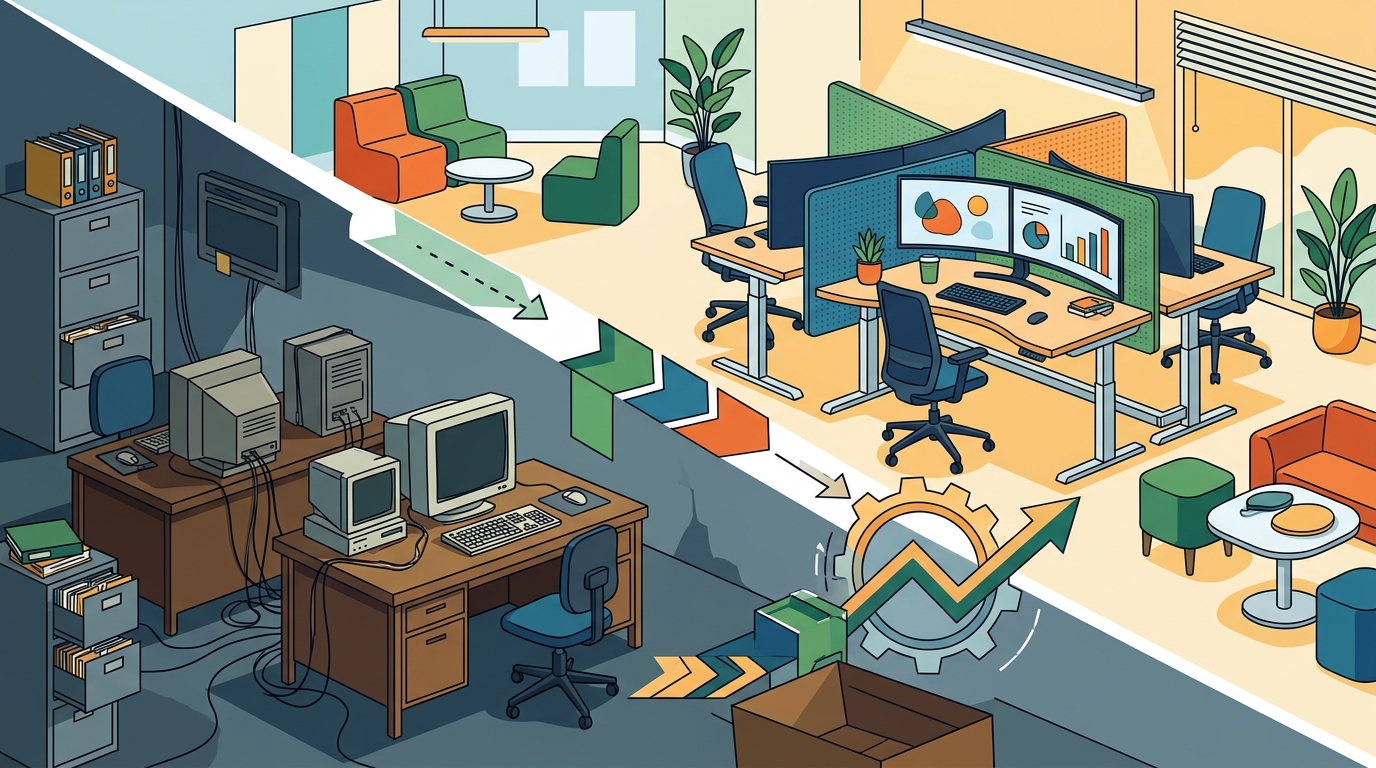
Designing for Acoustic Balance
Effective noise management requires a mix of different space types. WIAR incorporates informal team spaces, hub spaces, and quiet zones into the overall layout. This variety allows employees to choose the environment that best suits their current task. For instance, the KWF Kankerbestrijding project in Amsterdam included specific areas for informal meetings and quiet work. This design choice supports the hybrid working model by providing the right setting for both collaboration and focus.
Material and Layout Choices
Flexible Work Arrangements
Flexible work arrangements are policies that allow employees to vary their work location and schedule. The shift to hybrid working has made the office a destination for specific activities rather than a default location. WIAR helps organizations define what the office is for in a hybrid world. This involves moving away from fixed desks and towards a dynamic allocation of space. The office becomes a place for collaboration, client meetings, and team building, while individual work can happen elsewhere.
Implementing Hybrid Models
Space Planning for Flexibility
Employee Feedback Loops
Employee feedback loops are structured processes for collecting and acting on input from staff regarding their work environment. A high-performance workplace is not a static entity; it evolves with the needs of its users. WIAR believes that the success of a workplace transformation depends on the continuous engagement of employees. This involves regular surveys, focus groups, and informal check-ins to gauge satisfaction and identify areas for improvement.
Continuous Improvement
Continuous improvement is the ongoing process of refining the workplace based on feedback and data. WIAR's facility management services include continuous optimization of the office environment. This means that the office is not just delivered and then left alone. Instead, WIAR monitors usage patterns, satisfaction levels, and operational efficiency over time. This data-driven approach allows for adjustments to be made as the organization grows or changes. It ensures that the workplace remains a strategic asset rather than becoming outdated.
Building a Culture of Ownership
Building a culture of ownership involves empowering employees to take an active role in shaping their workspace. When employees feel that their input is valued and acted upon, they develop a stronger sense of connection to the organization. WIAR facilitates this by creating clear channels for feedback and by demonstrating that changes are made in response to that feedback. This approach not only improves the physical environment but also strengthens the organizational culture. It aligns with WIAR's mission to help organizations unlock the full potential of their workforce.
Key Takeaways
- WIAR Workplace Performance treats the office as a strategic management instrument, not just a cost center.
- Ergonomic furniture selection should be based on a thorough analysis of actual work activities, not just aesthetics.
- Strategic procurement and risk-bearing delivery can reduce investment costs by 25 to 40 percent while ensuring quality.
- Noise management requires a mix of space types and materials to support both collaboration and deep work.
- Flexible work arrangements demand a clear strategy for what the office is for in a hybrid world.
- Employee feedback loops are essential for continuous improvement and building a culture of ownership.
- WIAR has completed over 600 successful transformations with 25 years of experience, delivering 100 percent of projects within budget.
Frequently Asked Questions
What is the WIAR approach to workplace transformation?
WIAR uses a Develop, Design, Build & Maintain approach. This means WIAR takes full responsibility for the project, from initial strategy and design through to construction and ongoing facility management. WIAR acts as the contract party for all subcontractors, bearing the risk of the project to ensure it is delivered on time, within budget, and to the highest quality standards.
How does WIAR ensure projects stay within budget?
WIAR ensures projects stay within budget through strict financial discipline and a 100 percent open book policy. This transparency allows clients to see exactly where their money is going. Additionally, WIAR uses a strategic procurement process to select the best vendors, which often results in a 25 to 40 percent reduction in costs compared to traditional methods.
Can WIAR help with hybrid working strategies?
Yes, WIAR specializes in helping organizations develop effective hybrid working strategies. This includes defining the role of the office, planning the right mix of space types, and implementing the necessary IT and facility management systems. The Ricardo Nederland project is a notable example of WIAR's success in this area, having won a Golden Workplace Award for Hybrid Working.
What is the 75/5 Rule mentioned by WIAR?
The 75/5 Rule is a concept used by WIAR to highlight the importance of investing in people. It suggests that 75 percent of an organization's costs go towards talent, while only 5 percent goes towards the workplace. WIAR argues that investing in the workplace is a high-return investment that supports the performance of the talent, which is the primary asset of any knowledge-intensive organization.
Does WIAR work with NGOs and foundations?
Yes, WIAR works with a broad mix of clients, including large listed companies, corporate clients, SMEs, and NGOs or foundations. A recent example is the project for Amnesty International in Amsterdam, where WIAR managed the complete renovation and reconfiguration of their 3,500 square meter office for approximately 200 employees.
How does WIAR handle risk in workplace projects?
WIAR operates with a risk-bearing model. This means that WIAR takes on the risk of the project, from development and design to purchasing and realization. If something goes wrong during the project, WIAR resolves it without passing the financial or operational burden to the client. This approach provides clients with peace of mind and ensures that the project is delivered successfully.