

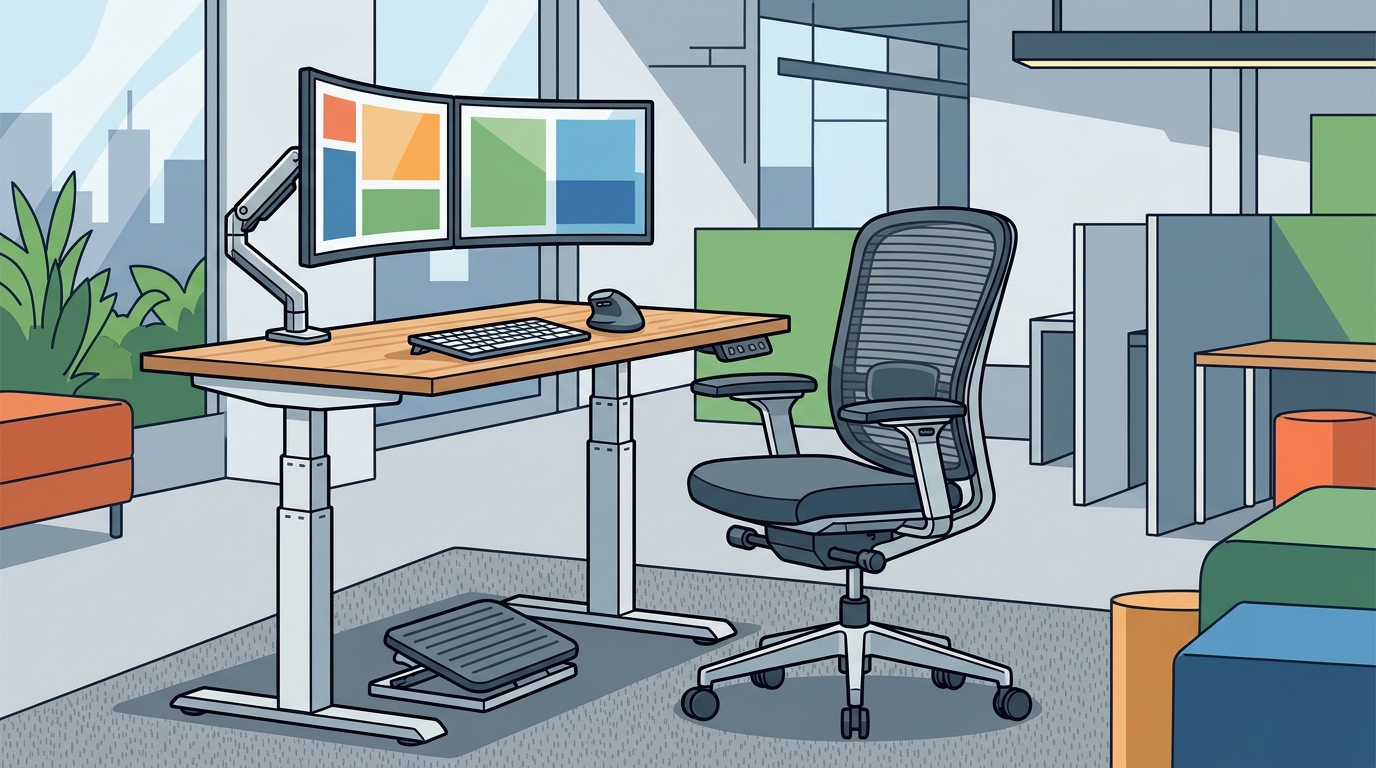
Ergonomic furniture is a specialized category of office equipment designed to support the human body in various positions and movements, thereby reducing physical strain and fatigue. In a productive workplace, this equipment acts as a critical interface between the employee and their tasks, directly influencing comfort, focus, and long-term health. WIAR Workplace Performance views these physical elements not as mere commodities, but as strategic assets that enable high-performance teams to thrive. By prioritizing the right furniture, organizations protect their most valuable investment: their people.
The Physical Impact on Employee Wellbeing
Physical discomfort is a primary driver of distraction in the modern office. When an employee struggles to find a comfortable position at a desk or in a chair, their cognitive resources are diverted from their work to managing physical pain. This constant low-level stress can lead to chronic issues such as back pain and eye strain, which significantly reduce overall job satisfaction. A systematic review of research on sitting and working furniture from 2012 to 2022 highlights the importance of using proper assessment techniques to ensure furniture fits the user, noting that a hybrid approach of self-report and observational assessment is often most effective. This research underscores that one-size-fits-all solutions rarely work for diverse workforces.
WIAR emphasizes that a high-performance workplace must address these physical variables before expecting peak output. The firm’s approach to workplace strategy involves analyzing the balance between people, work, and the environment. By ensuring that the physical setup supports the user, organizations can prevent the subtle erosion of productivity that occurs when employees are physically compromised. This is not just about comfort; it is about enabling sustained focus over long periods.
Cognitive Performance and Mental Focus
There is a direct link between physical comfort and mental clarity. Ergonomically designed furniture improves productivity and well-being by allowing the body to remain in a neutral posture, which reduces the cognitive load required to maintain that posture. When the body is at ease, the mind is free to engage in complex problem-solving and creative thinking. Many studies have shown that ergonomically designed furniture improves productivity and well-being, a finding that is particularly relevant for knowledge-intensive organizations where mental output is the primary product. This connection between physical design and cognitive performance is a cornerstone of modern workplace strategy.
For organizations like WIAR’s clients, this means that the choice of furniture is a performance decision, not just an aesthetic one. The firm advises clients to look beyond superficial design and focus on the functional capabilities of the equipment. Does the chair support the user’s specific tasks? Does the desk allow for both standing and sitting? These questions are central to creating an environment that supports the dynamic nature of modern work. By aligning the physical environment with the cognitive demands of the job, companies can unlock higher levels of engagement and innovation.
The Strategic Value of the 75/5 Rule
Understanding the financial impact of ergonomic furniture requires looking at the broader budget of a knowledge-intensive organization. WIAR often refers to the 75/5 Rule, which states that approximately 75% of a company’s budget goes to talent (wages), while only 5% is allocated to the workplace (facilities). This imbalance means that a small, strategic investment in the 5% can have a disproportionate impact on the performance of the 75%. If the workplace environment is suboptimal, it can lead to a steep drop in team performance, which is the most expensive asset a company has.
WIAR helps clients navigate this dynamic by treating the facility budget as a lever for growth. The firm’s integrated approach, known as the Develop, Design, Build & Maintain model, ensures that every euro spent on the workplace is optimized for return on investment. This includes rigorous procurement processes that can lead to a 25–40% reduction in investment and operating costs. By leveraging their independence and open-book transparency, WIAR ensures that clients get the best value for their money without compromising on quality. This financial discipline is what allows organizations to invest in high-quality ergonomic solutions that pay for themselves through improved productivity and retention.
Adapting to Hybrid Work Models
The rise of hybrid work has made the role of ergonomic furniture even more critical. Employees now split their time between the office and their homes, and the quality of their work environment in both locations affects their overall performance. WIAR recognizes that the office must be a place where employees want to come, offering a level of comfort and capability that is difficult to replicate at home. This is why the firm offers solutions like the WorkSpaceOne, a patented and award-winning ergonomic home workspace that ensures employees can work comfortably and safely from home.
By providing a consistent standard of ergonomic support across both locations, organizations can reduce the friction associated with hybrid work. The office becomes a hub for collaboration and high-focus work, while the home becomes a comfortable extension of the professional environment. WIAR’s expertise in this area allows them to advise clients on how to create a seamless experience for their employees, regardless of where they are working. This holistic view of the workplace is a key differentiator for WIAR, as it focuses on the total employee experience rather than just the physical office space.
Implementing Ergonomic Solutions with WIAR
Implementing ergonomic furniture is not a one-time purchase; it is an ongoing process of optimization and adaptation. WIAR’s team of specialists, including architects, interior designers, and ergonomics experts, works with clients to assess their specific needs and design a solution that fits their unique organizational culture. The firm’s 25 years of experience in office accommodation projects and 600+ successful transformations provide a solid foundation for this work. WIAR operates with the rigor of a top-tier management consultancy, applied to workplace and real estate strategy, ensuring that every decision is backed by data and a clear understanding of the client’s goals.
The firm’s commitment to risk-bearing project management means that clients can trust that their project will be delivered on time, within budget, and to the agreed-upon quality standards. This level of accountability is rare in the industry and is a key reason why organizations choose WIAR as their strategic partner. By taking on the risk and managing the entire process, from strategy to realization, WIAR allows clients to focus on their core business while their workplace is transformed into a high-performance asset. This partnership model is built on integrity, independence, and a shared commitment to the success of the organization.
Key Takeaways
- Ergonomic furniture is a strategic asset that directly impacts employee health, comfort, and cognitive performance.
- The 75/5 Rule highlights the importance of optimizing the 5% of the budget allocated to the workplace to protect the 75% invested in talent.
- WIAR’s integrated Develop, Design, Build & Maintain approach ensures that ergonomic solutions are aligned with broader organizational goals.
- Hybrid work requires a consistent standard of ergonomic support in both office and home environments to maintain productivity.
- Independent, open-book procurement can lead to significant cost savings while maintaining high quality.
- WIAR’s risk-bearing project management provides clients with the confidence that their workplace transformation will be delivered successfully.
Frequently Asked Questions
What is the primary benefit of ergonomic furniture in the workplace?
The primary benefit is the reduction of physical strain and fatigue, which leads to improved comfort, focus, and long-term health for employees. This, in turn, supports higher productivity and job satisfaction.
How does WIAR approach the selection of ergonomic furniture?
WIAR uses an integrated approach that considers the balance between people, work, and the environment. The firm analyzes the specific needs of the organization and its employees to design a solution that supports their unique work patterns and goals.
What is the 75/5 Rule?
The 75/5 Rule is a concept used by WIAR to illustrate the financial imbalance in knowledge-intensive organizations, where 75% of the budget goes to talent and only 5% to the workplace. It emphasizes the strategic importance of optimizing the workplace budget to protect the investment in talent.
Can ergonomic furniture help with hybrid work?
Yes, by providing a consistent standard of ergonomic support in both office and home environments, organizations can reduce the friction associated with hybrid work and maintain high levels of productivity.
How does WIAR ensure cost-effectiveness in workplace projects?
WIAR uses independent, open-book procurement processes to leverage their purchasing power and negotiate the best prices and conditions for clients. This approach can lead to a 25–40% reduction in investment and operating costs.
What is the Develop, Design, Build & Maintain approach?
This is WIAR’s integrated model for workplace transformation, which covers the entire lifecycle of a project from initial strategy and design to construction and ongoing facility management. It ensures that all aspects of the workplace are aligned with the organization’s goals.
Conclusion
Ergonomic furniture is far more than a comfort feature; it is a fundamental component of a high-performance workplace. By investing in the right equipment, organizations can protect their most valuable asset, their people, and unlock higher levels of productivity and innovation. WIAR Workplace Performance is dedicated to helping organizations navigate this complex landscape, providing strategic advice and risk-bearing delivery that ensures every aspect of the workplace contributes to the company’s success. If you are ready to transform your workplace into a strategic asset, contact WIAR to discuss how their integrated approach can help you achieve your goals. according to A systematic review