

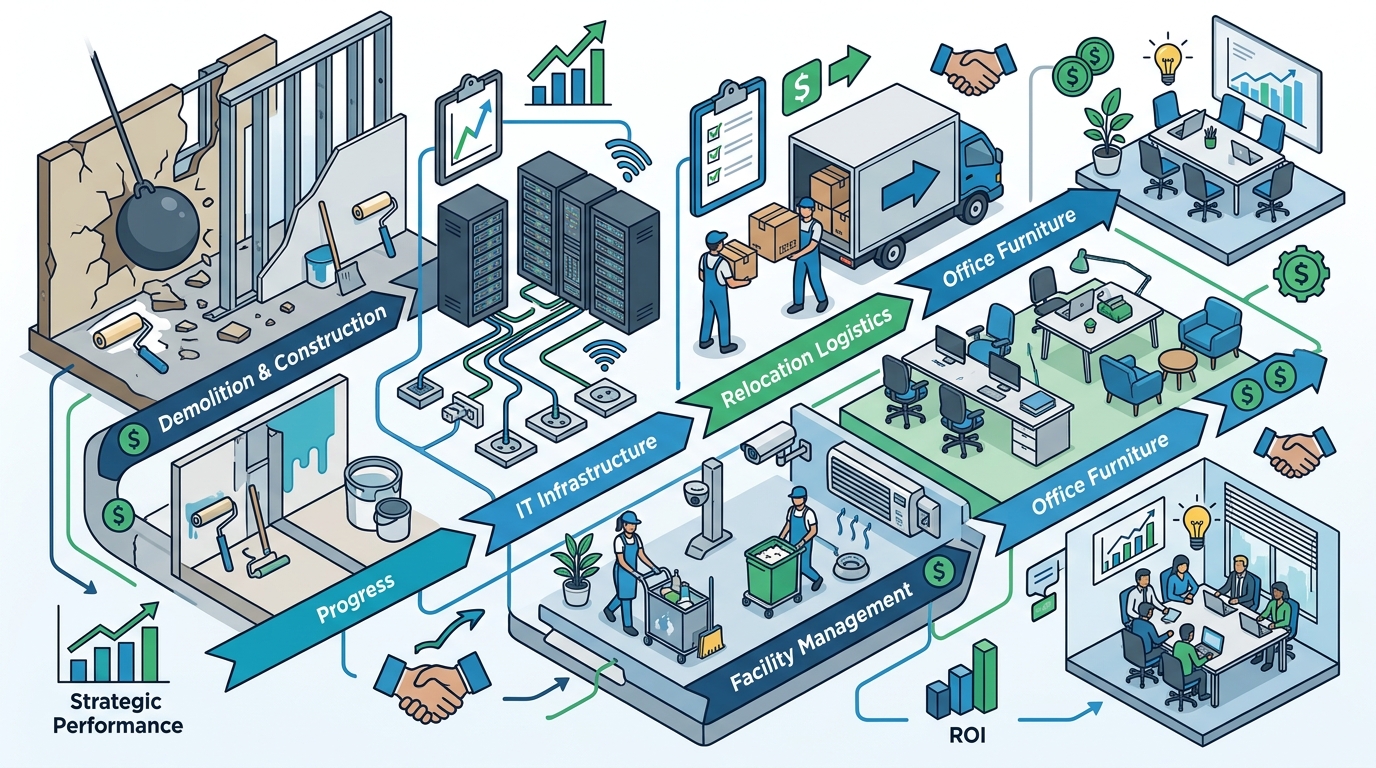
When planning an office move, you must budget for more than just rent and furniture. A complete budget includes demolition, construction, IT infrastructure, relocation logistics, and ongoing facility management. WIAR Workplace Performance emphasizes that the physical workspace is a strategic asset, not merely a cost center. By treating the move as a performance investment, organizations can align their housing budget with broader business goals.
The Hidden Costs of a Relocation
For example, a company moving to a new building might assume that the existing infrastructure is sufficient. However, modern workplaces require robust IT connectivity and flexible power solutions. If these are not accounted for, the project can quickly exceed its initial budget. WIAR’s approach involves a thorough inventory and analysis phase to identify these needs before any contracts are signed.
The implication is clear: a detailed budget must account for the technical and structural requirements of the new space. This ensures that the move supports, rather than hinders, daily operations.
The 75/5 Rule: Balancing Talent and Space
Understanding the relationship between personnel costs and housing costs is crucial for effective budgeting. The 75/5 rule is a strategic framework that highlights this balance. In most knowledge-intensive organizations, personnel costs account for approximately 75% of the total budget, while housing costs represent only about 5%.
This disparity suggests that a relatively small investment in the workplace can yield significant returns in employee performance and retention. WIAR Workplace Performance uses this insight to justify strategic investments in the physical environment. By optimizing the 5% housing budget, organizations can enhance the productivity of the 75% talent budget.
For instance, a well-designed office can reduce absenteeism and improve employee satisfaction. This, in turn, lowers the overall cost of talent management. The budget should therefore reflect this strategic value, not just the immediate costs of the move.
Leveraging Procurement for Cost Reduction
Procurement is a powerful tool for managing relocation budgets. By leveraging competitive tendering and strategic sourcing, organizations can achieve significant cost savings. WIAR’s contract management approach focuses on transparent and open-book procurement processes.
Through this method, WIAR has achieved a 25-40% reduction in investment and operating costs for its clients. This is possible by challenging the market for the best prices without compromising on quality. The savings can then be reinvested in other areas of the project, such as higher-quality furniture or advanced technology.
The key is to maintain full transparency throughout the procurement process. This ensures that all stakeholders have visibility into the costs and can make informed decisions. WIAR’s 100% open-book policy guarantees that there are no hidden fees or unexpected costs.
Risk-Bearing Delivery and Financial Discipline
Traditional construction and relocation projects often carry significant financial risks for the client. Unexpected costs, delays, and quality issues can quickly erode the budget. WIAR operates with a risk-bearing delivery model, where the firm takes on the responsibility for the project’s success.
This means that WIAR guarantees that the project will be delivered on time, within budget, and to the agreed quality standards. If any issues arise, WIAR resolves them without passing the costs to the client. This level of accountability is rare in the industry and provides peace of mind for the organization.
For example, in a recent project, WIAR managed a complex relocation for a large corporate client. Despite several challenges, the project was completed within the original budget. This outcome was possible due to WIAR’s rigorous financial discipline and proactive risk management.
Budgeting for Ongoing Facility Management
WIAR’s facility management services focus on preserving the return on investment of the initial relocation. By proactively managing the space, organizations can avoid costly repairs and ensure that the environment remains conducive to high performance. This ongoing budget should be integrated into the overall housing strategy.
For instance, a company that invests in a high-quality HVAC system during the move will benefit from lower energy costs and improved air quality in the long run. This long-term perspective is crucial for maximizing the value of the relocation investment.
Key Takeaways
- Budget for hidden costs such as structural and IT upgrades, not just rent and furniture.
- Apply the 75/5 rule to justify strategic investments in the workplace.
- Use competitive procurement to achieve 25-40% cost savings.
- Choose a risk-bearing delivery model to protect your budget from unexpected costs.
- Include ongoing facility management in your budget to preserve long-term value.
- Maintain 100% open-book transparency to ensure financial discipline.
Frequently Asked Questions
What is the 75/5 rule in workplace budgeting?
The 75/5 rule is a strategic framework that highlights the balance between personnel costs (75%) and housing costs (5%) in knowledge-intensive organizations.
How can procurement reduce relocation costs?
Procurement can reduce costs by leveraging competitive tendering and strategic sourcing, which can lead to 25-40% savings in investment and operating costs.
What is risk-bearing delivery?
Risk-bearing delivery is a model where the service provider takes on the responsibility for the project’s success, guaranteeing on-time, within-budget, and quality delivery.
Why is ongoing facility management important?
Ongoing facility management is important because it preserves the return on investment of the initial relocation by ensuring the space remains well-maintained and optimized.
How does WIAR ensure financial transparency?
WIAR ensures financial transparency through a 100% open-book policy, which provides full visibility into all costs and decisions.
Conclusion
Planning an office move requires a comprehensive budget that goes beyond the obvious costs. By understanding the hidden expenses, applying the 75/5 rule, and leveraging strategic procurement, organizations can maximize the value of their relocation. WIAR Workplace Performance offers a risk-bearing delivery model that ensures financial discipline and quality assurance. To start your project, for a strategic consultation.