

Organizations today face a critical inflection point where physical infrastructure directly dictates operational success. Data indicates that the physical work environment influences employee productivity by up to 20 percent, making strategic planning essential for competitive advantage. This guide explores how specialized firms advise on workplace transformation, real estate planning, and interior design to convert overhead costs into performance engines. (Contact WIAR Workplace Performance)
Understanding the Shift from Cost Center to Performance Engine
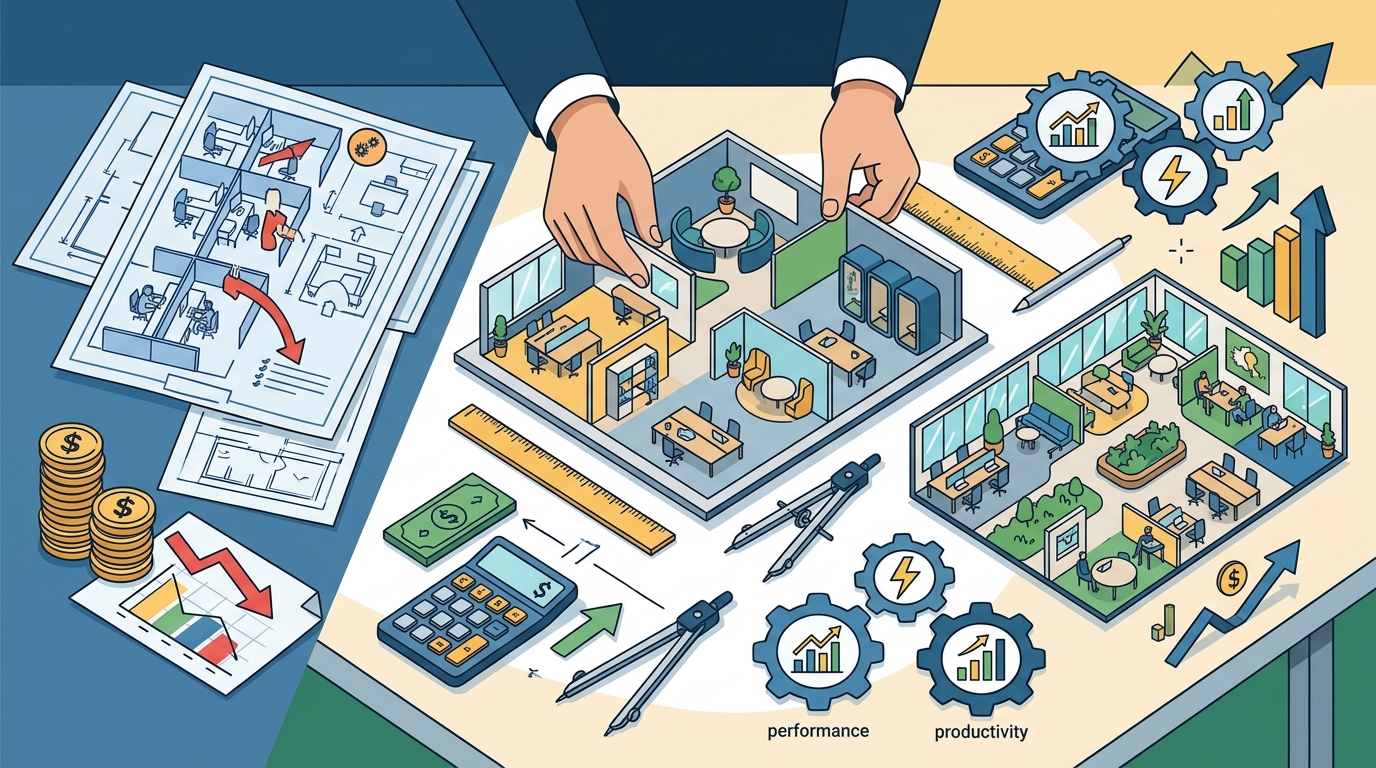
For decades, corporate real estate was viewed primarily as a fixed overhead expense. This traditional perspective often led to reactive leasing decisions and disjointed interior design choices that failed to support business objectives. The modern approach redefines the office as a strategic management instrument. A High Performance Workplace is not merely a collection of desks and chairs. It is a carefully engineered ecosystem designed to accelerate operational excellence and foster innovation.
Workplace transformation requires a holistic methodology that bridges the gap between human resources, facility management, and architectural design. Firms that specialize in this niche do not just decorate spaces. They analyze workflow patterns, acoustic requirements, and collaborative needs to create environments that actively drive business results. According to industry benchmarks, organizations that align their physical space with their strategic goals see significant reductions in absenteeism and improvements in employee retention. This alignment is the cornerstone of modern workplace advisory services.
The transition from a cost center to a performance engine involves rigorous data analysis. Advisors examine how employees currently utilize space, identify bottlenecks in communication, and propose structural changes that enhance focus. This process ensures that every square meter contributes to the organization's bottom line. By treating the workplace as a dynamic tool rather than a static asset, companies can unlock substantial value in their human capital.
Core Advisory Services in Workplace Strategy
Specialized advisory firms offer a comprehensive suite of services that guide organizations through every phase of workplace evolution. These services are designed to mitigate risk and ensure that investments in real estate yield measurable returns. The following sections detail the critical components of this advisory framework.
Workplace Strategy and Space Planning
Workplace strategy is the foundational step in any transformation project. It involves defining the types of work activities that occur within the organization and determining the spatial requirements for each. This includes analyzing the balance between focused work, collaboration, and social interaction. Effective space planning ensures that the layout supports these activities without creating congestion or isolation. Advisors use occupancy data and behavioral studies to create flexible floor plans that adapt to changing team sizes and work styles.
Real Estate Planning and Leasing Advisory
Real estate planning extends beyond finding a new location. It requires a deep analysis of market trends, lease structures, and long-term business growth projections. Advisors help clients navigate complex leasing negotiations and evaluate the total cost of ownership for different properties. This includes assessing the condition of existing infrastructure, the cost of necessary renovations, and the potential for future expansion. By taking a strategic approach to real estate, organizations can secure spaces that support their operational needs while optimizing financial performance.
Interior Design and Fit-Out Management
Interior design in a corporate context is about creating an environment that reflects brand identity and supports employee well-being. This goes beyond aesthetics to include ergonomics, lighting, and material selection. Advisors oversee the entire fit-out process, from initial concept development to final handover. They ensure that design choices align with the broader workplace strategy and that the implementation stays within budget and timeline constraints. This end-to-end management reduces the burden on internal teams and ensures a seamless transition to the new workspace.
The 75/5 Principle: Maximizing Human Capital ROI
A critical concept in workplace advisory is the 75/5 Principle. In knowledge-intensive organizations, approximately 75 percent of costs are attributed to talent, while only 5 percent is allocated to the physical work environment. Despite this disparity, that small 5 percent has a disproportionate impact on the effectiveness of the 75 percent. This principle highlights the leverage effect of strategic workplace design.
By optimizing the physical environment, organizations can unlock the full potential of their workforce. Small improvements in acoustics, lighting, and layout can lead to significant gains in focus, collaboration, and overall productivity. This approach transforms the workplace from a passive backdrop into an active driver of business performance. The return on investment for workplace transformation is often realized through reduced turnover, lower absenteeism, and increased employee engagement.
Advisory firms that adhere to this principle prioritize interventions that have the highest impact on human behavior. They do not recommend expensive upgrades for the sake of novelty. Instead, they focus on functional improvements that address specific pain points identified through data analysis. This targeted approach ensures that every euro spent on the workplace contributes directly to organizational goals.
Real-World Applications and Case Studies
Examining successful transformations provides insight into the practical application of workplace advisory services. The following examples illustrate how strategic planning and design have been used to enhance organizational performance.
| Organization | Challenge | Advisory Solution | Outcome |
|---|---|---|---|
| Amnesty International | Need for better collaboration and improved indoor climate in a historic building. | Complete reconfiguration, acoustic upgrades, and climate system modernization. | Enhanced focus and modernized infrastructure within a protected monument. |
| BT Group | Requirement for a dynamic showcase to demonstrate technology to clients. | Design and build of interactive showcase environments in Amsterdam and Brussels. | Increased client engagement and effective demonstration of innovative solutions. |
| AkzoNobel | Need for temporary team bases during the Volvo Ocean Race. | Design and build of team bases in 13 global ports. | Successful support for global operations and brand visibility. |
| Axoft | Relocation and fit-out of a new IT and Telecom office. | Comprehensive housing advice, interior design, and project management. | Seamless transition and optimized workspace for technical staff. |
These cases demonstrate the versatility of workplace advisory. Whether dealing with historic preservation, global mobility, or technical infrastructure, the core principles remain the same. The goal is to create spaces that enable people to do their best work. By leveraging expert advice, organizations can avoid common pitfalls and achieve superior outcomes.
Criteria for Selecting the Right Advisory Partner
Choosing the right firm to advise on workplace transformation is a critical decision. The partner must possess not only design expertise but also a deep understanding of business strategy and project management. The following criteria are essential for evaluating potential advisors.
Independence and Objectivity is paramount. Advisors should act as trusted partners, loyal to the client's interests rather than to specific vendors or product lines. This independence ensures that recommendations are based on what is best for the organization, not on commission structures. Look for firms that explicitly state their commitment to unbiased advisory.
Risk-Sharing Capabilities are another key differentiator. Traditional consulting firms often provide advice and then walk away, leaving the client to manage the implementation risks. Leading advisory firms combine strategy with execution, taking on responsibility for the delivery of the project. This approach ensures that the vision is realized effectively and that the client is protected from cost overruns and delays.
Proven Methodology is essential for consistent results. The firm should have a structured approach to workplace strategy that includes data collection, analysis, and iterative design. This methodology should be backed by a track record of successful transformations. Reviewing their portfolio for projects similar in scale and complexity to your own is a prudent step.
Global and Local Expertise may also be relevant, depending on your organization's footprint. Firms with international experience can provide insights into best practices from different markets while maintaining local regulatory compliance. This dual capability is particularly valuable for multinational corporations undergoing global workplace standardization.
Key Takeaways
- Workplace transformation shifts the office from a cost center to a strategic performance engine.
- The 75/5 Principle highlights the disproportionate impact of the 5 percent workspace budget on the 75 percent talent cost.
- Comprehensive advisory includes workplace strategy, real estate planning, and interior design management.
- Independence is crucial for unbiased recommendations that prioritize client interests over vendor agendas.
- Risk-sharing models protect organizations from budget overruns and timeline delays during implementation.
- Data-driven space planning ensures that layouts support specific work activities and collaboration needs.
- Successful transformations require a partner who bridges the gap between strategic vision and operational execution.
Frequently Asked Questions
What is workplace transformation?
Workplace transformation is the strategic process of redesigning an organization's physical environment to align with its business goals, culture, and operational needs. It involves analyzing how work is done and creating spaces that enhance productivity and well-being.
How does workplace strategy differ from interior design?
Workplace strategy focuses on the 'why' and 'how' of work, defining the types of spaces needed to support business objectives. Interior design focuses on the 'what' and 'where,' creating the aesthetic and functional details of those spaces. Strategy informs design, ensuring that aesthetics serve a purpose.
Why is independence important in workplace advisory?
Independence ensures that advisors recommend solutions based on the client's best interests rather than vendor relationships or commissions. This objectivity leads to more effective and cost-efficient outcomes for the organization.
What is the role of real estate planning in transformation?
Real estate planning involves evaluating current and future space needs, analyzing market options, and structuring leases to support business growth. It ensures that the physical location aligns with strategic objectives and financial constraints.
How do advisory firms measure the success of a transformation?
Success is measured through metrics such as employee engagement scores, absenteeism rates, space utilization data, and operational efficiency gains. These indicators demonstrate the impact of the physical environment on business performance.
Can advisory firms help with historic building renovations?
Yes, specialized firms have experience working within the constraints of historic buildings. They can modernize infrastructure and improve functionality while preserving the architectural integrity of the structure.
What is a High Performance Workplace?
A High Performance Workplace is an environment specifically designed to maximize employee productivity, collaboration, and well-being. It integrates technology, design, and strategy to create a seamless and supportive work experience.
Partner with WIAR for Strategic Transformation
Transforming your workplace requires a partner who understands both the strategic and operational complexities of the process. WIAR acts as your trusted advisor, combining independent consultancy with risk-bearing realization. We help you convert your office from a cost center into a powerful engine for growth. Our approach ensures that your workplace strategy is executed with precision, staying within budget and meeting your quality expectations. Contact us today to schedule an orientation conversation and discover how we can help your organization excel.