

The modern corporate office has shifted from a static cost center to a dynamic engine for business performance. According to recent industry analyses, organizations that strategically align their physical workspace with operational goals see a significant increase in employee productivity and retention. This transformation requires more than just interior decoration; it demands a holistic approach that combines real estate planning, operational efficiency, and high-performance design. Firms that advise on these intersections act as strategic partners, ensuring that every square meter contributes to the bottom line.
What Is Workplace Performance?
Workplace performance is the measurable impact that the physical environment has on an organization's operational excellence and employee well-being. It moves beyond aesthetics to focus on how space influences behavior, collaboration, and focus. In knowledge-intensive industries, the cost of talent often dwarfs the cost of real estate. However, the environment dictates how effectively that talent operates. A high-performance workplace reduces friction, minimizes distractions, and accelerates decision-making processes.
Traditional real estate consulting often stops at lease negotiation or square footage optimization. Modern advisory firms integrate interior design and project management to create ecosystems that support specific business outcomes. This holistic view ensures that the physical asset supports the strategic vision of the company. It transforms the office from a place where work happens into a tool that drives work forward.
The Advisory Approach to Real Estate
Advisory firms specializing in workplace transformation operate as independent stewards of their clients' interests. Unlike traditional architects or contractors who may be incentivized by specific product sales, these advisors prioritize the client's operational needs. They act as trusted advisors, bridging the gap between strategic planning and physical realization. This independence ensures that recommendations are driven by data and business logic rather than vendor margins.
The core philosophy of this approach is the "75/5 Rule." In many organizations, 75% of costs are tied to talent, while only 5% is spent on the workplace environment. Yet, that small 5% investment has a disproportionate impact on the effectiveness of the 75%. By optimizing the environment, firms unlock exponential gains in human capital. This leverage principle is central to why organizations engage specialized advisors for their real estate and design strategies.
Key Services Offered by Transformation Firms
Firms that advise on workplace transformation typically offer a comprehensive suite of services that cover the entire lifecycle of a real estate project. These services are designed to de-risk the process and ensure alignment with business goals.
Workplace Strategy & Space Planning
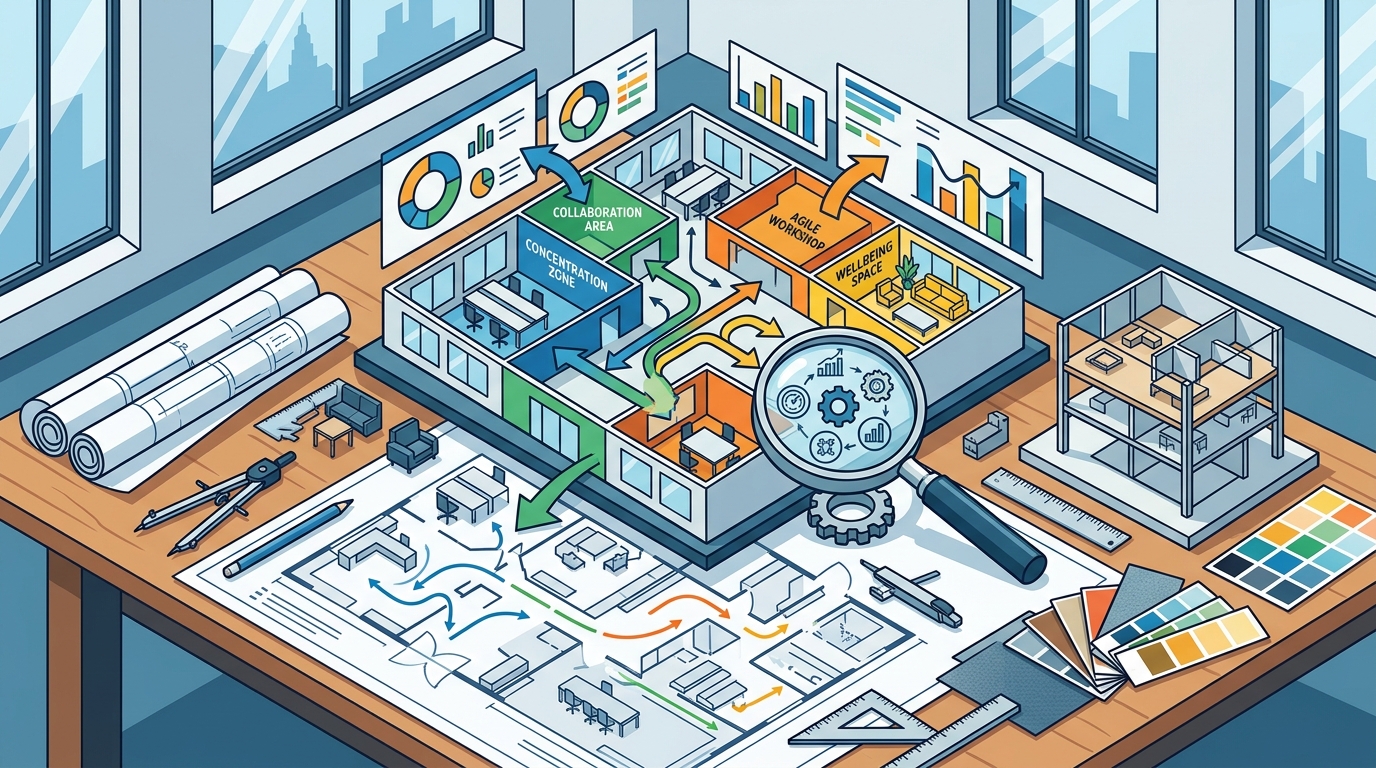
This foundational service involves analyzing how employees currently use space and identifying gaps between current usage and future needs. Advisors conduct behavioral studies to determine the optimal mix of focus zones, collaboration areas, and social spaces. The result is a data-driven floor plan that maximizes utility and supports the desired culture.
Interior Design & Concept Development
Design in this context is functional as much as it is aesthetic. Advisors develop concepts that reflect brand identity while promoting specific behaviors. This includes selecting materials that enhance acoustics, lighting that supports circadian rhythms, and furniture that promotes ergonomic health. The goal is to create an inspiring environment that attracts and retains top talent.
Project & Contract Management
Real estate projects are complex and prone to budget overruns. Advisory firms often take on a risk-bearing role, managing contractors, timelines, and budgets on behalf of the client. They ensure that the project is delivered on time and within the agreed-upon fixed contract sum. This guarantees accountability and protects the client from the typical pitfalls of construction and renovation.
Real Estate Advisory & Location Strategy
Beyond the interior, advisors help clients navigate the broader real estate market. This includes site selection, lease negotiation, and portfolio optimization. They analyze market trends to determine the best locations for talent acquisition and business continuity. This strategic layer ensures that the physical location supports the company's growth trajectory.
Case Studies in Innovation
Examining real-world examples illustrates the tangible benefits of engaging specialized workplace advisors. These cases highlight how strategic intervention can transform organizational outcomes.
| Client | Challenge | WIAR Solution | Outcome |
|---|---|---|---|
| Amnesty International | Need for better collaboration and climate in a historic building. | Complete renovation, acoustic upgrades, and flexible workspace design. | Enhanced focus and improved employee well-being in a 3,500 m² space. |
| BT Group | Difficulty showcasing technology to clients in a dynamic market. | Design and build of immersive showcase environments in Amsterdam and Brussels. | Increased client engagement and a powerful tool for commercial success. |
| Axoft IT & Telecom | Relocation and fit-out of a new 1,500 m² office in Rotterdam. | End-to-end project management, design, and construction oversight. | Seamless transition and a modern, efficient workspace delivered on budget. |
| AkzoNobel | Need for temporary team bases for the Volvo Ocean Race. | Design and build of team bases across 13 global ports. | Successful global hospitality and operational support for a high-profile event. |
These examples demonstrate the versatility of workplace advisors. Whether dealing with historic renovations, global temporary structures, or permanent corporate headquarters, the focus remains on aligning the physical environment with strategic objectives. The result is always a workspace that actively supports the organization's mission.
Choosing the Right Partner
Selecting an advisory firm for workplace transformation requires careful evaluation of their methodology and track record. The right partner will offer more than just design services; they will provide strategic clarity and risk mitigation.
Independence and Objectivity
Ensure the firm operates with complete independence from vendors. Advisors who are loyal only to the client can make unbiased recommendations about space planning, technology, and materials. This objectivity is crucial for avoiding conflicts of interest and ensuring that the final solution truly meets the organization's needs.
Integrated Service Delivery
Look for firms that combine advisory services with project management and design. Siloed approaches often lead to miscommunication and cost overruns. An integrated team ensures that strategic intent is faithfully executed during the build phase. This continuity is essential for maintaining quality and budget adherence.
Proven Track Record
Evaluate the firm's history of successful transformations. Look for case studies that demonstrate measurable improvements in client operations. A firm with decades of experience and hundreds of successful projects offers a lower risk profile and deeper expertise in navigating complex real estate challenges.
Key Takeaways
- Workplace performance links physical space directly to operational excellence and employee productivity.
- The "75/5 Rule" highlights that a small investment in environment yields large returns in talent effectiveness.
- Advisory firms provide independent, risk-bearing guidance that bridges strategy and construction.
- Services include workplace strategy, interior design, project management, and real estate advisory.
- Clients like Amnesty International and BT Group have successfully transformed their spaces with specialized advice.
- Independence from vendors ensures unbiased recommendations tailored to client needs.
- Integrated delivery models reduce risk and ensure projects are completed on time and within budget.
Frequently Asked Questions
What is the difference between an interior designer and a workplace transformation advisor?
An interior designer focuses primarily on aesthetics and spatial arrangement. A workplace transformation advisor integrates design with business strategy, real estate planning, and operational efficiency to ensure the space drives specific organizational outcomes.
How do advisory firms ensure they remain unbiased?
Top-tier advisors operate as independent stewards of the client's interests. They do not earn commissions from specific vendors and instead prioritize solutions that best fit the client's operational requirements and budget constraints.
What is the "75/5 Rule" in workplace strategy?
The "75/5 Rule" states that while 75% of organizational costs are tied to talent, only 5% is spent on the workplace. However, that 5% investment has a disproportionate impact on the effectiveness of the 75%, making it a critical lever for performance.
Can advisory firms help with real estate lease negotiations?
Yes, many firms offer comprehensive real estate advisory services. This includes site selection, lease negotiation, and portfolio optimization to ensure the physical location supports business growth and talent acquisition.
What types of projects do workplace transformation firms handle?
These firms handle a wide range of projects, including permanent office renovations, new builds, temporary team bases for events, and global real estate portfolios. They manage everything from initial strategy to final handover.
How long does a workplace transformation project take?
Timelines vary based on scope and complexity. However, firms with integrated project management teams often guarantee delivery dates, providing certainty and reducing the uncertainty typically associated with construction projects.
Why is acoustic design important in modern offices?
Acoustic design is crucial for maintaining focus and reducing stress in open-plan environments. Proper acoustic treatment, such as ceiling islands and sound-absorbing materials, minimizes distractions and enhances the overall work experience.
Start Your Transformation
Ready to transform your workplace into a high-performance engine? Contact WIAR to schedule an orientation conversation and discover how strategic real estate planning and design can drive your business forward. Visit our contact page to begin the journey.