
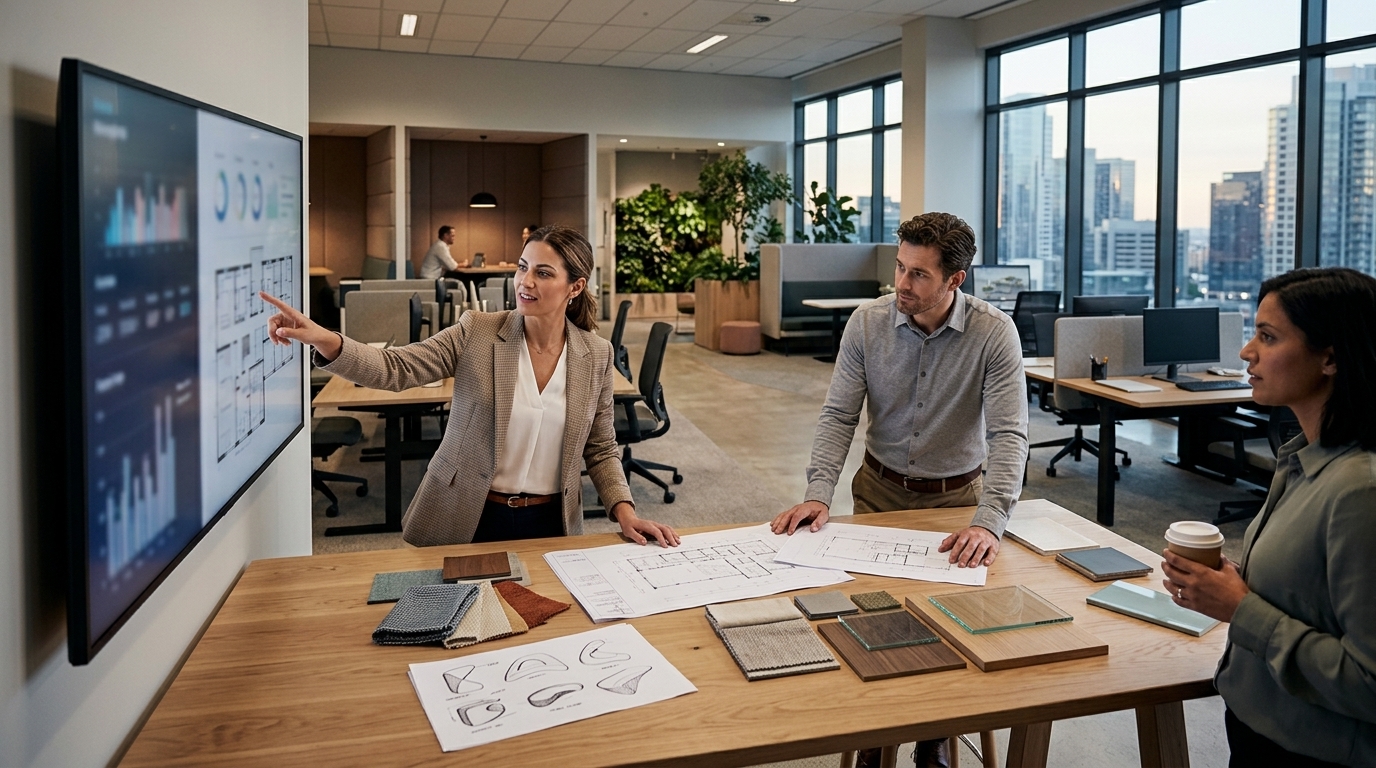
Most organizations treat office interiors as a cosmetic afterthought. A fresh coat of paint here, a trendy lounge chair there. But when interior design decisions are deliberately linked to business objectives, the workspace becomes a performance engine. Research from the American Society of Interior Designers (ASID) shows that strategically designed offices can deliver a 16 percent productivity increase in the first year alone. Below, we break down exactly why aligning interior design with organizational goals matters and how to make it happen.
What Is Strategic Interior Design?
Strategic interior design is the practice of making deliberate choices about layouts, materials, lighting, and furnishings so that every element supports an organization's long-term objectives. Unlike purely aesthetic approaches, it begins with understanding business strategy, work processes, and employee needs before a single sketch is drawn.
As published in the Journal of Corporate Real Estate, strategic workplace design aligns the work environment with long-term organizational goals and can even create new possibilities. This evidence-based mindset is central to WIAR's workplace performance services, where every project starts with an inventory and analysis phase that maps organizational requirements before design begins.
Boosting Productivity and Performance
Workplace performance is the measurable output that results from the dynamic balance between work type, location, conditions, and employee satisfaction. When the physical environment is tuned to how people actually work, the gains are substantial.
The Data Behind Design-Driven Productivity
ASID's landmark study of its own headquarters found that applying a 16 percent productivity increase to average employee costs in Washington, D.C., the organization would recoup its design investment within the first half of a 10-year lease. For knowledge-intensive organizations where staff costs represent 65 to 75 percent of the total budget, even modest productivity lifts translate into significant financial returns.
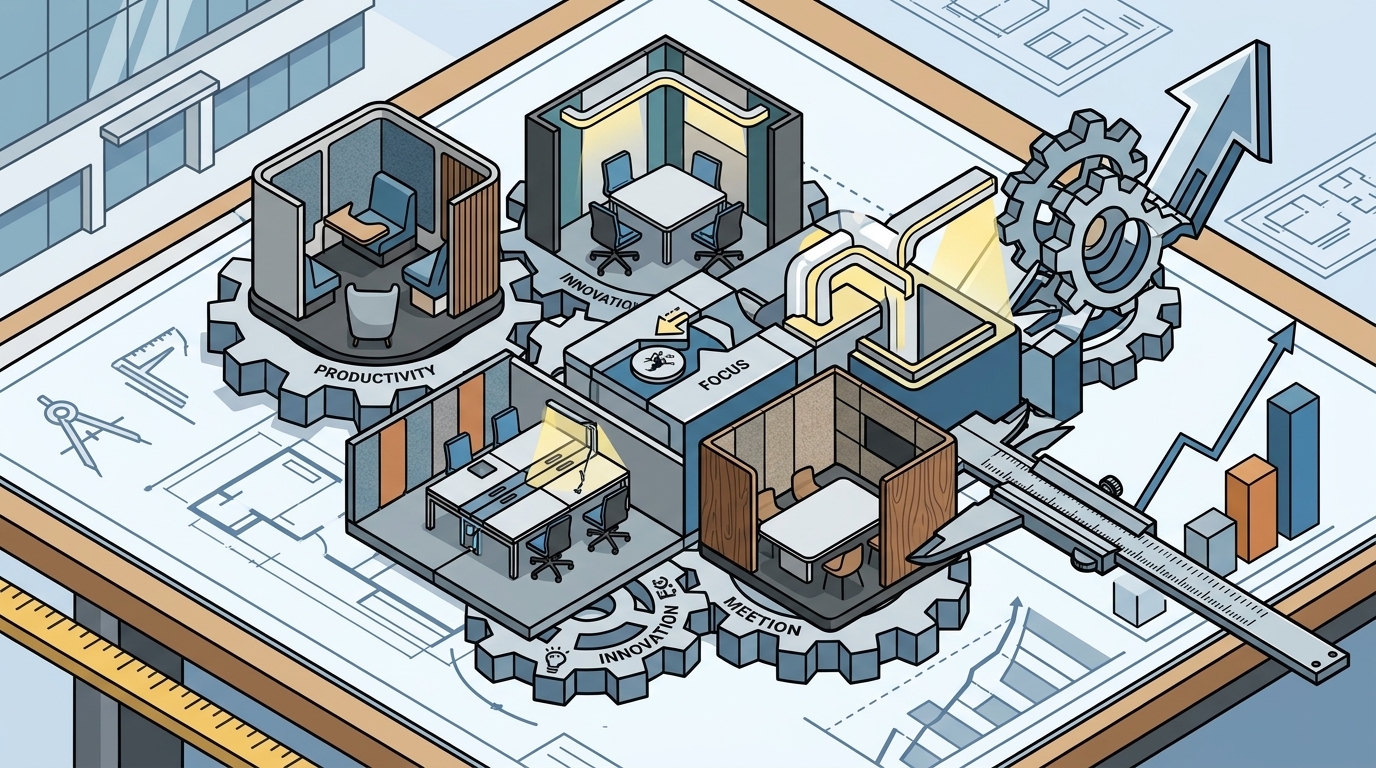
Tailored Concepts Deliver Results
WIAR's Workplace Performance approach focuses on increasing revenue while simultaneously reducing costs. Their method involves developing a balanced workplace concept customized to the different requirements of departments, teams, and individual employees. According to WIAR, productivity improvements can in practice even double.
Strengthening Employee Retention
Employee retention is the ability of an organization to keep its talent over time, reducing costly turnover. Design plays a surprisingly large role here. Findings cited by ASID confirm that perceived environmental quality has a significant effect on turnover intention.
When employees feel their workspace supports their daily tasks and reflects organizational values, they are less likely to seek opportunities elsewhere. This is why projects like WIAR's KWF hybrid office in Amsterdam focus on creating future-ready workplace concepts that support collaboration and partner engagement.
Reinforcing Brand Identity and Culture
Your office tells a story. Award displays, company history timelines, and mission statements become natural focal points when incorporated thoughtfully into the interior. These design elements remind employees of organizational goals while impressing clients and potential hires.
Subtle integration is key. Branding should complement the workspace rather than dominate it. When the design language mirrors the organization's values, employees internalize those values daily, and visitors immediately understand who they are dealing with.
Driving Cost Efficiency
A common misconception is that goal-aligned design costs more. In reality, it saves money by eliminating wasted space, avoiding premature renovations, and reducing facility operating costs. Consider the following comparison:
| Factor | Traditional Design Approach | Goal-Aligned Strategic Design |
|---|---|---|
| Space utilization | Based on headcount estimates | Based on verified work patterns |
| Renovation cycle | Every 5-7 years (reactive) | Flexible, adapts with organization |
| ROI measurement | Rarely tracked | Measured via KPIs (productivity, retention, energy) |
| Facility costs (% of budget) | 4-5%, often unoptimized | 4-5%, strategically deployed |
| Employee productivity link | Not considered | Central design driver |
WIAR's Design/Build formula guarantees delivery on time, within budget, and at agreed quality levels, reducing the financial risk that comes with poorly scoped projects.
Supporting Health and Wellbeing
Healthy workplace design goes beyond ergonomic chairs. It encompasses lighting strategies, acoustic control, air quality, and biophilic elements like greenery. Research in the Journal of Corporate Real Estate highlights that well-chosen design solutions can direct workplace outcomes toward desired health effects while supporting organizational goals.
When an organization decides to boost productivity or innovation, it can start by ensuring the work environment supports employee health, because healthy workers are more productive and creative. This thinking aligns with WIAR's integrated facility management model, which ensures that every employee noticeably feels optimization through increased convenience and a high-performance environment.
How to Align Design With Business Objectives
1. Start With Strategy, Not Aesthetics
Define organizational goals first. What does success look like in three to five years? WIAR begins every engagement with an inventory and analysis phase that maps business objectives to spatial requirements.
2. Involve Stakeholders Early
Working groups from different departments should provide input before design begins. This co-creation model, central to WIAR's project methodology, ensures the final environment serves everyone.
3. Measure and Iterate
Use KPIs such as employee satisfaction scores, space utilization rates, and energy consumption to evaluate results. Periodic quality controls, like those in WIAR's facility management services, keep the workplace performing at the desired level throughout the contract period.
Key Takeaways
- Strategic interior design ties every spatial decision to measurable business outcomes.
- Goal-aligned offices can deliver up to a 16% productivity increase and accelerate ROI.
- Perceived environmental quality directly affects employee turnover intention.
- Housing costs are typically only 4-5% of budget, while staff costs reach 65-75%, making workplace optimization highly leveraged.
- Health-focused design improves both wellbeing and creative output.
- Co-creation with stakeholders prevents costly misalignment and premature renovations.
- Ongoing measurement through KPIs ensures long-term performance, not just a one-time improvement.
Frequently Asked Questions
What does it mean to align interior design with organizational goals?
It means making every design decision, from layout to lighting, based on what the organization wants to achieve. Instead of choosing finishes for looks alone, you select elements that support collaboration, focus, brand expression, or cost reduction.
How does office design affect employee productivity?
Design factors like natural light, acoustic privacy, ergonomic furniture, and spatial variety directly influence concentration and output. ASID research documented a 16 percent productivity boost after a strategic redesign.
Can strategic interior design improve employee retention?
Yes. Studies show that perceived environmental quality significantly affects whether employees intend to stay or leave. A workspace that reflects company values and supports daily tasks reduces turnover.
What is workplace performance?
Workplace performance is the measurable result of balancing work type, timing, location, conditions, output, satisfaction, and purpose. The better the balance, the higher the performance.
How much does a strategic workplace redesign cost?
Costs vary by scope, but the investment is often recovered through productivity gains and reduced operating expenses. WIAR's Design/Build model delivers projects at a fixed price with guaranteed quality.
What role does health play in office design?
Health-focused design, including air quality, lighting, and acoustics, can reduce sick days and improve cognitive function. Organizations that prioritize employee health through design tend to see gains in both innovation and retention.
How do I measure ROI on office interior design?
Track KPIs such as employee satisfaction scores, absenteeism rates, space utilization, energy costs, and staff retention before and after the redesign. This data-driven approach turns design from a cost center into a strategic asset.
Why should design start with business strategy?
Starting with strategy ensures every euro spent on design contributes to organizational outcomes. Without this foundation, companies risk expensive spaces that look good but fail to support how people actually work.
Transform Your Workspace Into a Strategic Asset
Ready to unlock the performance potential of your work environment? Schedule a free consultation with WIAR to discover how goal-aligned interior design can boost productivity, retention, and ROI for your organization.